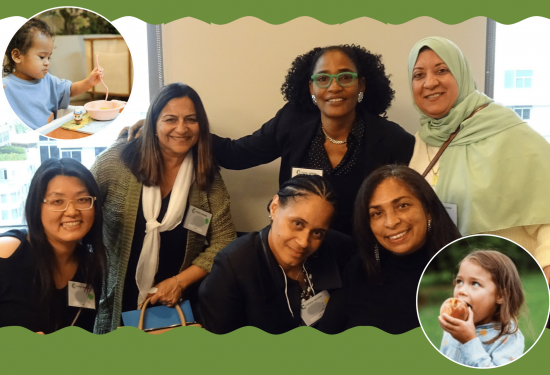
Although we celebrate Provider Appreciation Day one day a year (on the Friday before Mother’s Day) the home-based child care providers who care for our children earn our gratitude and support every single day, every single moment of the year. Providers are not just the essential caregivers who make it possible for parents to go to work everyday secure in the knowledge that their children are safe, happy, and learning. For many families, home-based child care providers are also the reliable, if often invisible, superheroes who step in to save the day during life’s little (and big) emergencies.
We interviewed parents and providers in Western North Carolina who weathered Hurricane Helene together in 2024. Their bond, forged in a storm, has continued to sustain the grownups, the children, and the economy through the region’s recovery.
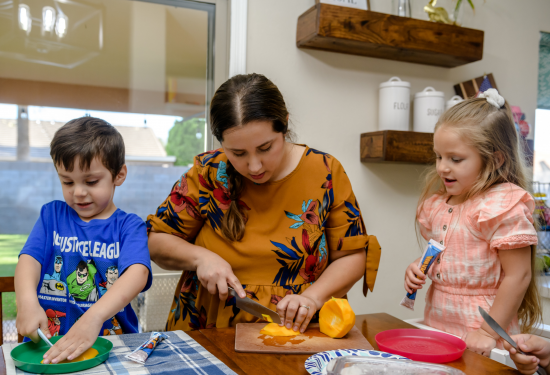
Laura and Daniel Walton live next door to Harmony Preschool, a home-based child care program run by Amica Venturi. Their daughter, Calliope, has attended Harmony since she was a baby. “We love that there’s lots of free play that allows Calliope to just be a child,” says Laura. “And Amica is so good with them..” adds Daniel. “She teaches the kids kindness, to each other and to the planet, even to the little tiny Kiwis in the pots next to the driveway. Appreciating nature and each other, all this connection will be part of their formative memories.”
When Hurricane Helene swept through the neighborhood, leaving a wake of downed trees, a county-wide power outage, no internet or phone service, and no running water, the Waltons and Venturi, along with other neighbors took care of each other. “It really hammered home the importance of building relationships within the immediate surroundings,” says Daniel, a freelance journalist who was exceptionally busy reporting on the aftermath of the storm, while Laura, a baker, made bread and other items for a local emergency foodbank. “We’re not just living our separate lives. We’re woven into the fabric of community, and to have Amica right next door is incredibly special. We have a teacher who loves to grow things, plants and also children.”
Finally, when Venturi was able to open her program again, more than a month after the storm, both parents and children were delighted to get back into their routines and return to some level of normalcy. Plus, according to Laura, one of the things Amica is best at is helping children process difficult emotions and find their own value and agency within the small community of friends who become “family” at Harmony.
Hazel Otto, whose son Nolen also attends Harmony Preschool, agrees. “Kids are so special because they feel so much and they are learning so much and they experience everything so intensely. What I love at Amica’s is that Nolan gets to pick what is feeding his soul, whether that’s blocks or dolls or coloring or being a flying dragon running across the yard. At the same time he has someone who checks in with him and reads his emotions and kind of reports that to me, so that after my work day, I can pick up and transition knowing what kind of day he’s had already.” Many families also note that because home-based child care providers take care of their children from birth to five and know their children so well, they are often the first to notice when something is different developmentally. Furthermore, providers have the experience and expertise to refer parents to a specialist or other early intervention resources.
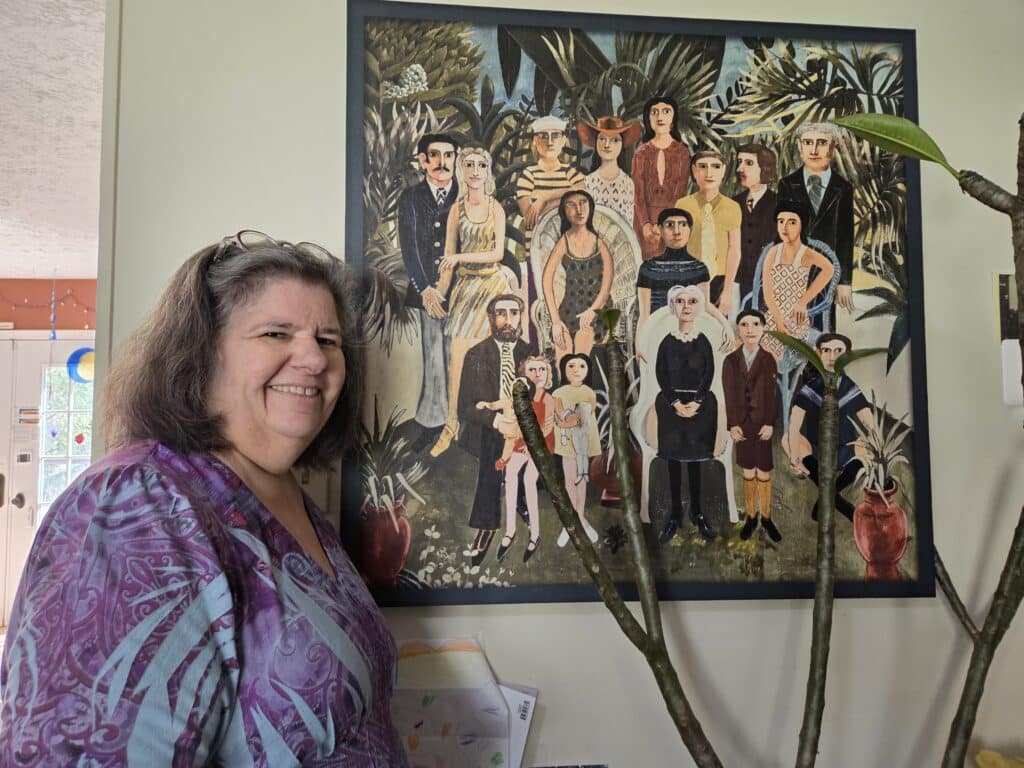
The emotional support and resource referrals are a critical support for busy families. Following Hurricane Helene, Cynthia Logan, a home-based provider in Forest City, North Carolina, who is licensed for 24-7 care, stepped in to care for parents who were themselves putting in extra hours because of the disaster. “One of my parents is a long-haul trucker who couldn’t get back because of the blocked roads,” she says. “I kept her son right through the storm and after until she could return.”
For Amica Venturi, Cynthia Logan, and the thousands of other home-based providers who care for our children and support our families day in and day out, so that we can survive the littlest and the big disasters, we are grateful beyond words.
Thank you for the structure and routines—the meals, the naps, the outside time, the clean-up songs— that help us feel secure, nurture ourselves and others, and learn to navigate a sometimes chaotic world.
Thank you for growing our curiosity and creativity by letting us play in the mud, invent stories, build imaginary towns, and investigate how ants work.
Thank you for teaching us letters, colors, numbers, “please,” “thank you,” “excuse me,” “I’m sorry,” how to wait, how to share, and how to potty train without tears.
Thank you for going the extra mile when we got sick, mad, stuck in traffic, needed a shoulder to cry on, or your wise counsel about how to access extra resources.
Thank you for showing up for our kids so that we can show up to work on time every day without worry or fear.
And most of all, thank you for your love, generosity, wisdom and prodigious experience doing the hardest, most important job in the world: growing our children from the tiniest sprouts into strong and resilient human beings.
We appreciate you!