

Home Grown Collaborates with Partners and Providers to Develop Detailed Comments to USDA

In February 2024, the U.S. Department of Agriculture (USDA) published a proposed rule and opened a 90-day public comment period on one, very large, aspect of the Child and Adult Care Food Program (CACFP): the serious deficiency process. In response, Home Grown collaborated with partners and providers to develop detailed comments to USDA regarding the proposed rules.

Thirty-six national organizations representing early childhood educators in family child care, child care centers, Early Head Start, Head Start, and others serving millions of children in care joined Home Grown in an additional letter. Our shared goal is that children, families and caregivers receive the health, economic and food security investments needed to thrive.

Together, we share USDA’s commitment to improving the serious deficiency process as a crucial step to ensuring children can access healthy meals and snacks in child care from providers and CACFP sponsors who they trust and rely on.
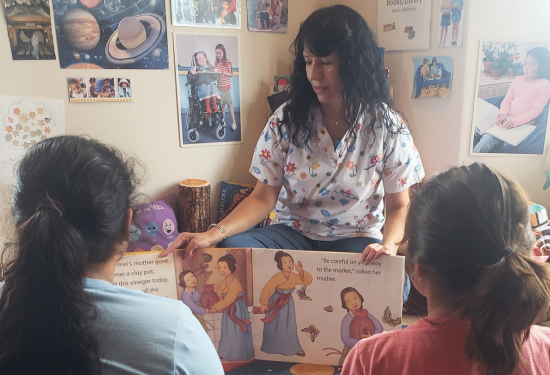
Women’s contributions and experiences are not well represented in the record books, but it is just as rich and worth celebrating. Ours is a tale of community, resilience, and connection to one another, and it is inextricably linked with care work. 
During Women’s History Month, we celebrate the contributions that women have made to every corner of our society and honor their achievements. Among these leaders are the more than 5 million women who form the backbone of home-based child care (HBCC).
For generations, Black home-based child care providers have built systems of care rooted in community, trust, and resilience, often stepping in where formal systems fell short. Of the over 5 million home-based child care providers, including Family Child Care providers and paid and unpaid Family Friend and Neighbor caregivers, roughly a quarter in each subgroup identify as Black Non-Hispanic