Strengthening HBCC Networks: An Evidence-Based Framework for High Quality (Benchmarks)

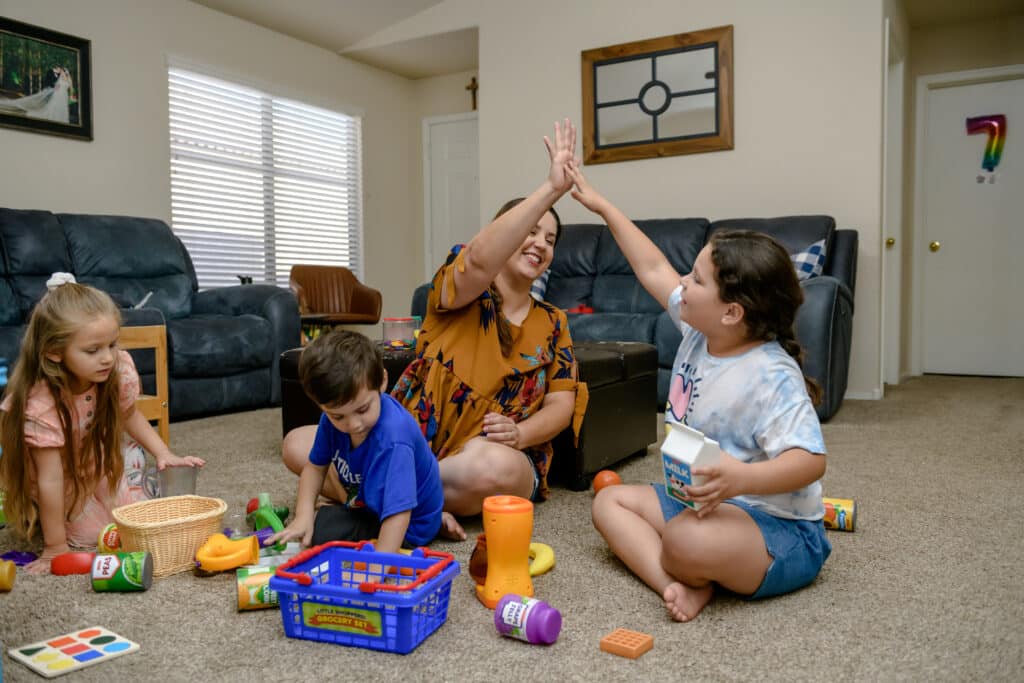
A woman and three children play with toys in a living room; two high-five, smiling and sitting on the floor.

Developed in partnership with the Erikson Institute, this brief describes 11 quality benchmarks for home-based child care networks. The benchmarks and related indicators articulate standards and operations based on evidence from research and practice. Together, the benchmarks and indicators represent a picture of what a high-quality network strategy can look like.

Women’s contributions and experiences are not well represented in the record books, but it is just as rich and worth celebrating. Ours is a tale of community, resilience, and connection to one another, and it is inextricably linked with care work. 
During Women’s History Month, we celebrate the contributions that women have made to every corner of our society and honor their achievements. Among these leaders are the more than 5 million women who form the backbone of home-based child care (HBCC).
For generations, Black home-based child care providers have built systems of care rooted in community, trust, and resilience, often stepping in where formal systems fell short. Of the over 5 million home-based child care providers, including Family Child Care providers and paid and unpaid Family Friend and Neighbor caregivers, roughly a quarter in each subgroup identify as Black Non-Hispanic