Cook County, Illinois, Case Study of Success: FFN Participation in CACFP

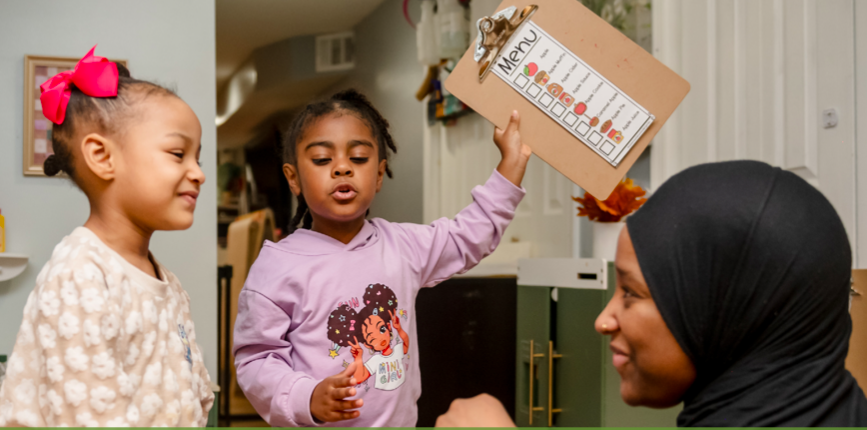
Two young girls talk to a woman in a hijab; one girl holds up a clipboard with a menu chart.

The federal Child and Adult Care Food Program (CACFP) is designed to reimburse child care programs for healthy meals and snacks served. But eligibility for participation and successful documentation of compliance with program requirements has been a challenge for the estimated 5 million family, friend and neighbor (FFN) caregivers who look after 11.5 million children.

This case study of Cook County, Illinois is meant to offer a path forward for state child care administrators; state CACFP lead agencies; CACFP food program sponsors; child advocates, child care advocates and hunger advocates; and intermediary organizations working on behalf of young children in their communities. The data in Cook County are compelling and definitively dispel the myth that FFN caregivers cannot participate in CACFP.

Related resource: Implementation Guide: Linking FFN Caregivers to the CACFP Program
Women’s contributions and experiences are not well represented in the record books, but it is just as rich and worth celebrating. Ours is a tale of community, resilience, and connection to one another, and it is inextricably linked with care work. 
During Women’s History Month, we celebrate the contributions that women have made to every corner of our society and honor their achievements. Among these leaders are the more than 5 million women who form the backbone of home-based child care (HBCC).
For generations, Black home-based child care providers have built systems of care rooted in community, trust, and resilience, often stepping in where formal systems fell short. Of the over 5 million home-based child care providers, including Family Child Care providers and paid and unpaid Family Friend and Neighbor caregivers, roughly a quarter in each subgroup identify as Black Non-Hispanic